Prime100 founder Tzena Naarden says it’s nuts to discourage investment that helps companies scale
Starting a business is scary. Prime100, the premium pet food business I started with my father Ray Rivett in 2014, began its life through sheer determination and hard work. It was funded by my father selling his house and putting his all in to get this business going.
Our office was a storeroom in an old building. We saw a need and an opportunity to provide a premium single-protein food for Australia’s beloved pets using locally sourced meats, not the usual low-value kibble that flooded our pet store shelves. We were starting from scratch and every cent counted.
You put a lot on the line personally when you take a risk like that. The government seems to believe its tax changes and the proposed Innovative Business CGT Concession clock this. But its narrow casting ignores how hard it is to scale a value-added agri-business like Prime100 into an internationally competitive enterprise that can catch the eye of a multinational buyer like Colgate-Palmolive.
It is hard to turn a $33 million pet food manufacturer employing 50 staff into a $102 million enterprise with three times the workforce and a thriving export arm. It takes management expertise and a big injection of cash.
That money did not come from a bank or super fund. It came from private capital, and behind most private capital funds in Australia sit domestic individual investors.
Few people realise it, but these investors now provide around a third of the equity funding for start-ups and scale-ups in this country. In some venture capital and private equity funds, it's as high as 70 per cent.
This is the funding that carries businesses across the "valley of death" - the gap between a promising idea and a company big enough to create hundreds of jobs, expand production and exports.
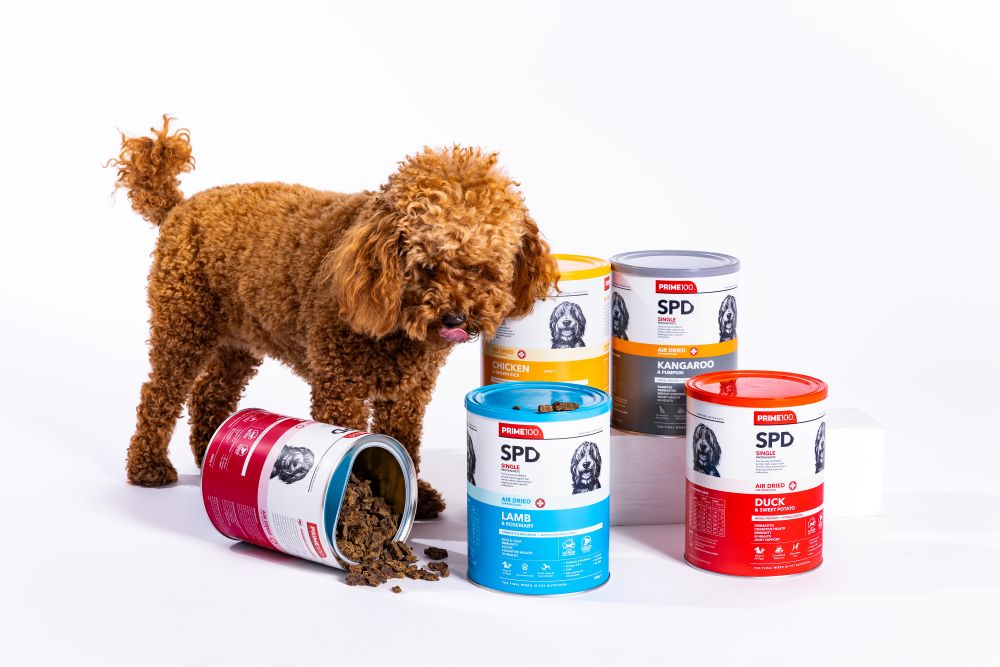
Prime100 tripled growth in a third of the time with private equity backing
Whatever its broader merits regarding intergenerational equity, the government's capital gains tax changes treat the three main sources of growth capital very differently. Superannuation funds keep their concessional treatment under the new indexation regime. Foreign investors also keep their flow-through treatment. But domestic individual investors - the people writing the cheques that scale Australian businesses like Prime 100 - face rates rising from a maximum of 23.5 per cent to between 30 and 47 per cent unless their investment fits inside the government’s very narrow definition of an innovative business.
The result is a tax system that makes it cheaper for foreigners to own Australian growth companies than for Australians to back them. That is precisely the kind of distortion the government says it wants to eliminate.
The assumption that superannuation will step in to fill this funding void is blatantly wrong. If it could, it would already be doing so. Not because super funds lack the desire, but because of an arithmetic problem. Australia’s superannuation system has consolidated significantly. The number of funds has fallen from 74 in 2021 to 44 in 2025, while assets under management have increased by around $700 billion. Large funds need to write very large cheques – circa $200 million - for an investment to be meaningful. A growth-stage business may need $20 million or $50 million. No amount of goodwill closes that gap.
The government should seek to give Australian companies enough flexibility to raise the right type and size of capital at the point they need it. It should also avoid defining “innovation” too narrowly. Prime 100 was not a deep-tech company. It’s a value-added agri-business sourcing ingredients from Australian farmers, creating local jobs, building manufacturing capability, and developing products that can compete internationally. A concession limited to a narrow category of innovation leaves highly productive, job-rich businesses like this on the wrong side of an arbitrary line.
Prime 100 would not have grown the way it did without private capital. It’s nuts to discourage growth equity investment that helps start-ups become big. If critical sources of capital dry up, businesses like Prime 100 grow more slowly. And repeat founders like me start to ask whether Australia is the right place to start a company when it’s going to be harder than it already is to scale it here.
Capital gains tax sounds like a story about investors. It isn't. It's a story about whether the next Prime 100 gets built in Melbourne. Where it gets its ingredients. Where it establishes its supply chain. And who gets the jobs and tax revenue from those workers’ wages. Why are we making it harder to have a future made in Australia?
Tzena Naarden is co-founder of Prime100